Neuroscience & Psychiatry
Neuroscience is the scientific study of the nervous system — encompassing the brain, spinal cord, and neural networks. As one of the most interdisciplinary domains of science, neuroscience bridges biology, psychology, medicine, chemistry, physics, computer science, and engineering.
Modern neuroscience has evolved into specialized branches targeting different layers of inquiry — from molecular function to complex behavior and cognition.
Quick navigation: jump into the core pillars below.
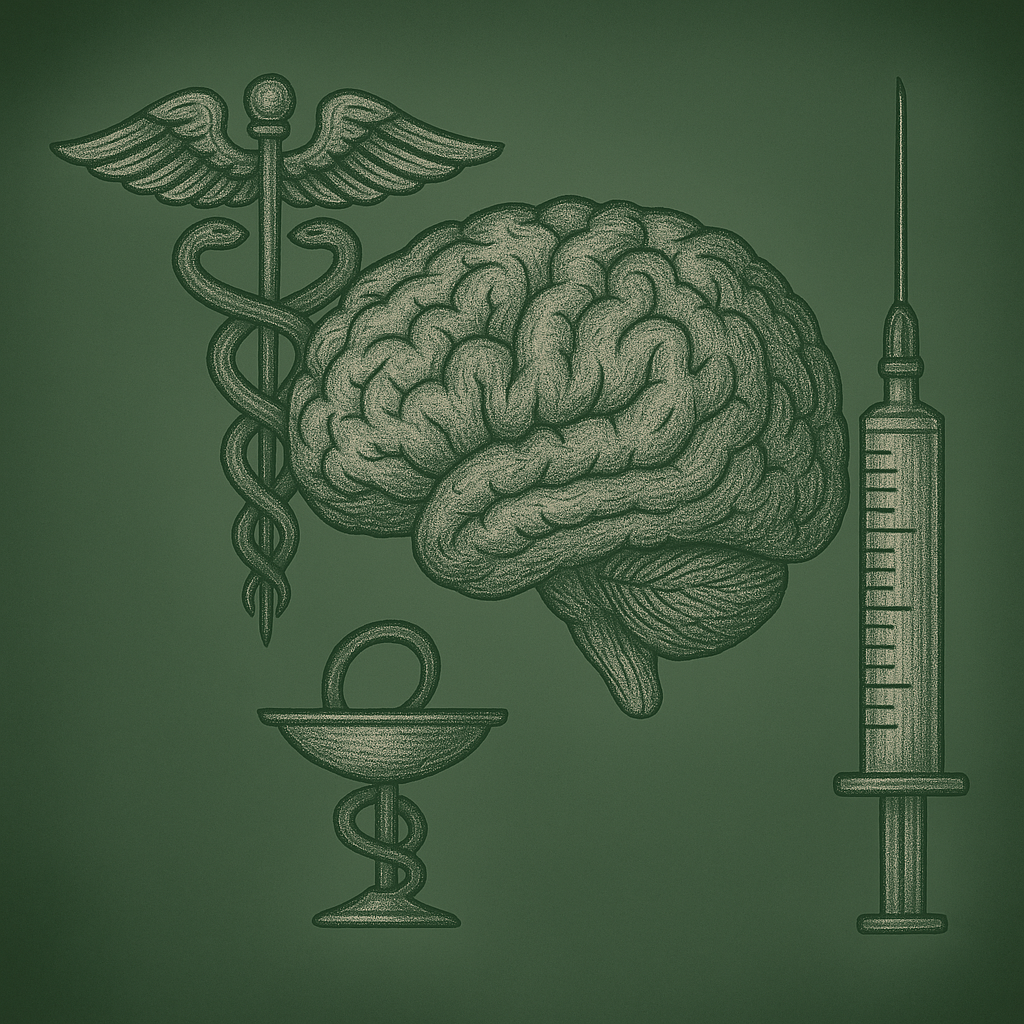
The Major Branches of Neuroscience
- Molecular and Cellular Neuroscience
- Developmental Neuroscience
- Systems Neuroscience
- Cognitive Neuroscience
- Behavioral Neuroscience (Biopsychology)
- Clinical Neuroscience
- Computational Neuroscience
- Neuroinformatics
- Evolutionary and Comparative Neuroscience
- Neuroengineering
Applications of Neuroscience
- Medicine: Diagnosing and treating neurodegenerative diseases.
- Education: Applying learning theory from brain research.
- Technology: Developing neural-inspired AI systems.
- Mental Health: Understanding and treating disorders like PTSD or depression.
Interdisciplinary Extensions
Psychology
Insight into perception, learning, emotion, behavior.
Genetics
Identification of hereditary neurological conditions.
Physics
Neural imaging (e.g., MRI physics), signal processing.
Computer Science
AI, deep learning models inspired by the brain.
Philosophy
Ethical debates and theories of consciousness.