Orthopedics
A surgical and medical specialty focused on the diagnosis, treatment, prevention, and rehabilitation of disorders affecting bones, joints, ligaments, tendons, and muscles.
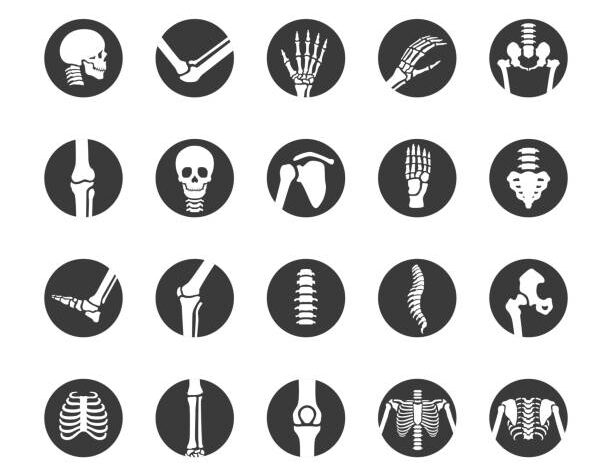
Overview & Origins
Orthopedics has evolved from early fracture care to a sophisticated discipline managing degenerative, traumatic, inflammatory, and congenital conditions across all ages.
Evidence of splinted limbs in Egyptian mummies suggests early fracture management. Hippocrates described spinal traction and shoulder reductions. Modern orthopedics emerged after Nicolas Andry’s Orthopaedia (1741), with rapid advances in the 20th century through radiography, antisepsis, internal fixation, and joint arthroplasty.
Orthopedic Subspecialties
- Trauma Orthopedics — Acute fracture and dislocation management.
- Pediatric Orthopedics — DDH, clubfoot, limb-length discrepancy.
- Spine Surgery — Disc herniation, stenosis, scoliosis.
- Sports Medicine — Arthroscopy for meniscal/ligament tears.
- Joint Arthroplasty — Hip/knee replacements; revisions.
- Orthopedic Oncology — Primary bone tumors, metastases.
- Hand & Microvascular — Carpal tunnel, tendon injuries, replantation.
- Foot & Ankle — Deformities, sports injuries, Achilles rupture.
Musculoskeletal System Anatomy
Orthopedics addresses:
- Bones — Structural support; marrow source (≈206 in adults).
- Joints — Synovial (movable), cartilaginous, fibrous articulations.
- Muscles — 600+ skeletal muscles enable voluntary motion.
- Tendons — Muscle-to-bone force transmission.
- Ligaments — Bone-to-bone stability.
- Cartilage — Low-friction joint surfaces.
Diagnostic Approaches
Clinical Evaluation
Comprehensive history and physical examination, including gait analysis, range-of-motion testing, and special maneuvers, remain the cornerstone of diagnosis.
Imaging Techniques
- X-rays — Bony injury and joint space assessment.
- MRI — Soft tissues, intervertebral discs, marrow.
- CT — Complex fracture characterization.
- Ultrasound — Dynamic tendon/rotator cuff evaluation.
- Bone scan/PET — Metabolic activity for tumor/infection.
Treatment Modalities
Conservative Management
- Physical Therapy — Strengthening, proprioception, return to function.
- Pharmacotherapy — NSAIDs, DMARDs, corticosteroids, selected adjuvants.
- Orthotic Devices — Braces, insoles, off-loading supports.
- Injections — Corticosteroids, PRP, hyaluronic acid.
Surgical Treatments
- ORIF — Open reduction and internal fixation for fractures.
- Arthroscopy — Minimally invasive joint repair.
- Total Joint Replacement — Prosthetic hip/knee; revision strategies.
- Spinal Fusion — Stabilization for degenerative disease.
- Tendon Repair/Reconstruction — Rotator cuff, Achilles, flexor/extensor systems.
Technological Advances
- Robotic Surgery — Precision alignment in arthroplasty.
- 3D Printing — Custom implants and surgical planning models.
- Biologics — PRP and cell-based adjuncts for healing.
- Computer-Assisted Navigation — Improved intraoperative accuracy.
- Wearable Sensors — Post-op monitoring and rehab metrics.
Challenges in the Field
- Aging Population — Rising degenerative joint disease burden.
- Cost-Effectiveness — Balancing innovation and access.
- Surgical Complications — Infection, DVT/PE, prosthesis failure.
- Rehabilitation Gaps — Long-term PT access, rural/low-resource settings.
On the Horizon
- Regenerative Medicine — Stem-cell and scaffold-based cartilage regeneration.
- Artificial Intelligence — Predictive modeling for outcomes and diagnostics.
- Tele-orthopedics — Remote assessment and virtual rehabilitation.
- Smart Implants — Real-time load/wear/performance monitoring.
Why It Matters
Orthopedics bridges complex anatomy, diagnostic acumen, and evolving surgical technology. Mastery of fundamentals informs trauma care, rehabilitation, chronic disease management, and surgical innovation.