Ophthalmology vs Iridology
The human eye has long fascinated science and medicine for its intricate anatomy and its windows into systemic health. Ophthalmology is the evidence-based medical specialty for diagnosing and treating eye disease. Iridology is an alternative practice that claims to assess health from iris patterns and colors.
Ophthalmology remains a cornerstone of medical science for eye care. Iridology, while historically interesting, lacks scientific validation and should not replace conventional diagnostics. Always consult a qualified ophthalmologist for accurate assessment and management.
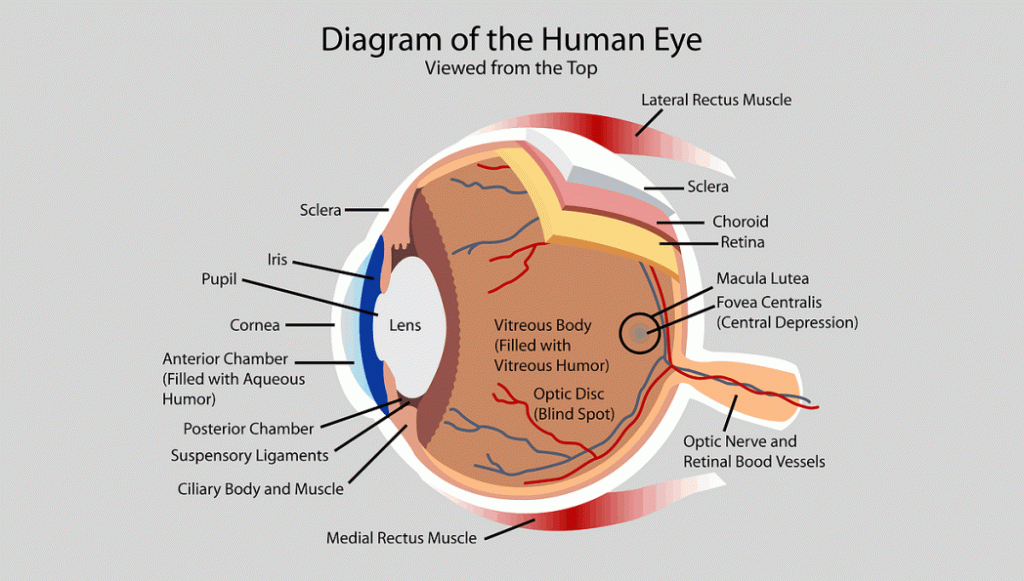
Ophthalmology
Ophthalmology specializes in the anatomy, physiology, and diseases of the eye. Ophthalmologists (MD/DO) perform comprehensive eye exams, diagnose and treat disease, prescribe medications, and perform surgery.
Training & Certification
To become an ophthalmologist, one typically completes:
- Bachelor’s degree
- Medical school (MD or DO)
- Residency in ophthalmology (3–4 years)
- Optional fellowship for subspecialization
Board certification is obtained through the American Board of Ophthalmology and requires ongoing continuing medical education.
Clinical Applications
Commonly managed conditions include:
- Cataracts
- Glaucoma
- Age-related macular degeneration
- Diabetic retinopathy
- Refractive errors (myopia, hyperopia, astigmatism)
Diagnostic tools: optical coherence tomography (OCT), fundus photography, and visual field testing.
Iridology
Iridology proposes that iris patterns, colors, and other features reflect systemic health status. Practitioners use iris charts mapping iris zones to body organs and systems.
Historical Background
Developed in the 19th century with contributions by Ignaz von Peczely and Nils Liljequist, who reported iris changes after exposure to iodine and quinine—observations later formalized in iris charts.
Scientific Evaluation
Key findings from published studies:
- (1979) Study of 143 patients: iridologists could not reliably detect kidney disease; performance approximated chance.
- Systematic reviews: conclude insufficient evidence for diagnostic validity.
- (2005) Blinded test in 110 subjects (68 with biopsy-proven cancers): iridology showed no diagnostic value for cancers studied.
Comparative Analysis
| Aspect | Ophthalmology | Iridology |
|---|---|---|
| Foundation | Evidence-based medical science | Alternative practice with historical roots |
| Practitioner | Licensed physicians (MD/DO) | Typically non-medical practitioners |
| Diagnostic Tools | Advanced imaging, clinical exams, lab testing | Visual inspection of the iris; charts |
| Scientific Support | Strong empirical evidence base | Lacks robust validation in controlled studies |
| Clinical Application | Diagnoses and treats eye diseases; performs surgery | Claims systemic assessment; not a substitute for medical care |