Genetic Inheritance
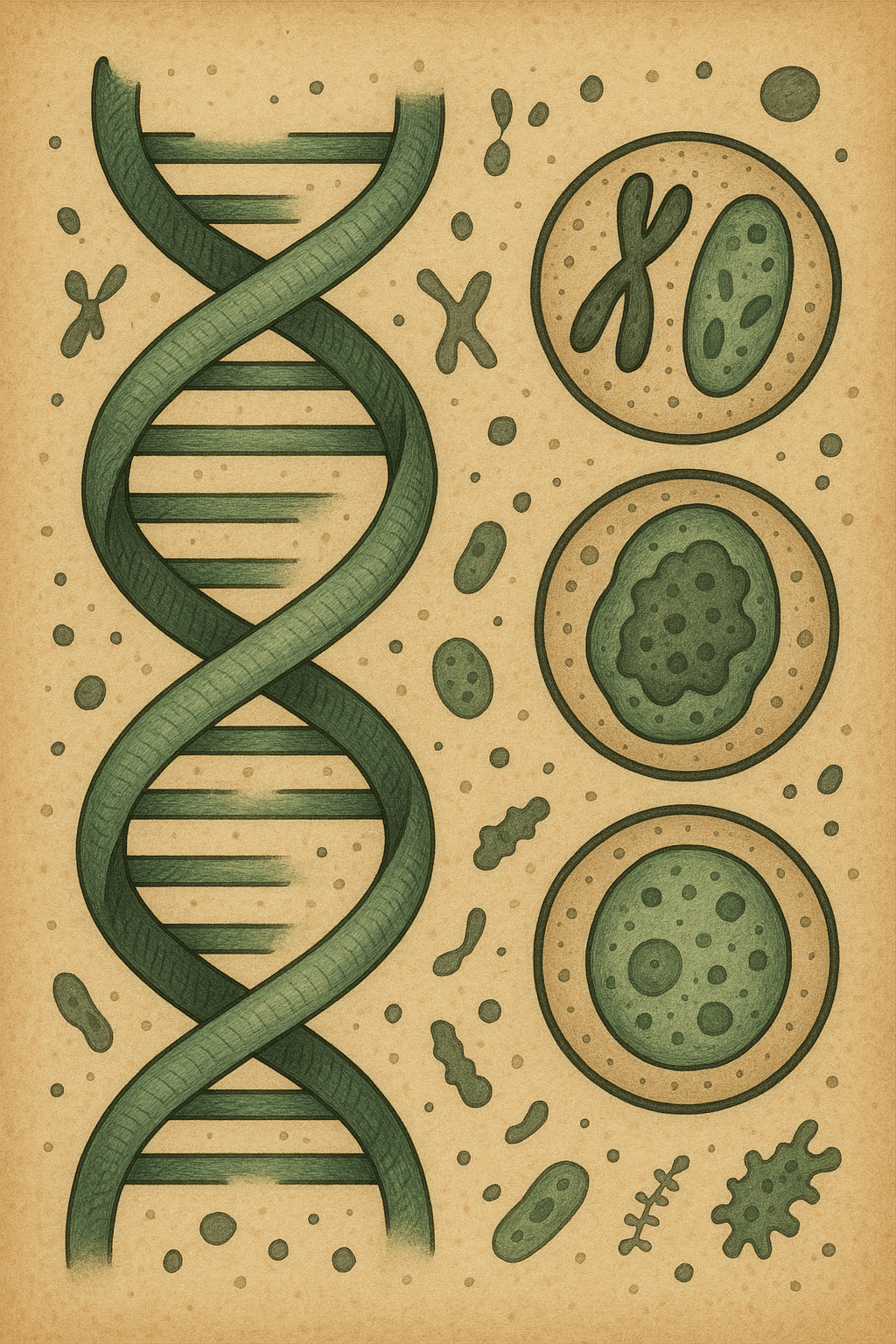
Genetic inheritance is the process by which organisms pass on genetic information to their offspring. This transmission of genes determines traits across generations—from eye color and blood type to disease susceptibility—via replication and expression of DNA.
Quick skim here → then jump into the linked pages when you want deeper inheritance patterns and development logic.
DNA, Chromosomes, and Genes
- DNA nucleotides: adenine (A), thymine (T), cytosine (C), guanine (G).
- Chromosomes: DNA is packaged into chromosomes; humans typically have 46 (23 pairs).
- Gene: a DNA sequence that encodes a protein or functional RNA. Alleles are variants of the same gene.
Genome Basics
- The human genome contains ~3 billion base pairs.
- The Human Genome Project (completed in 2003) generated a near-complete gene map and reference sequence for human DNA.
Cell Division & Genetic Transmission
| Process | Purpose | Outcome |
|---|---|---|
| Mitosis | Growth, tissue repair, and asexual cell proliferation. | Two genetically identical diploid cells. |
| Meiosis | Formation of gametes (sperm/egg); reduction of chromosome number. | Four genetically distinct haploid cells; recombination increases diversity. |
Mendelian Principles
| Law / Concept | Definition | Example |
|---|---|---|
| Law of Segregation | Each individual has two alleles for each gene; alleles separate during gamete formation. | Meiosis yields gametes carrying only one allele of a gene. |
| Law of Independent Assortment | Alleles for genes on different chromosomes are inherited independently (approximate; linkage modifies). | Hair color and blood type often segregate independently (ignoring linkage). |
| Law of Dominance | One allele may mask another’s effect (dominant vs. recessive). | Brown allele masks blue eye allele in heterozygotes. |
| Monohybrid Cross | Inheritance tracking for a single trait. | Classic (Aa × Aa) → ~3:1 phenotype ratio (simple dominance). |
| Dihybrid Cross | Inheritance tracking for two traits simultaneously. | (AaBb × AaBb) → ~9:3:3:1 phenotype ratio (if unlinked). |
Beyond Mendel: Exceptions You’ll See
- Incomplete dominance and codominance (e.g., ABO blood groups).
- Multiple alleles, polygenic traits, and gene–environment interactions.
- Sex-linked inheritance (X-linked traits) and mitochondrial inheritance.
- Linkage and recombination frequency altering expected ratios.
Heredity, Development, & Sensory Phenomena
Developmental biology intersects with genetics where gene expression programs pattern tissues and organs. Variants in developmental pathways can influence neural wiring and sensory processing.
- Congenital tinnitus: persistent perception of sound without an external source; can reflect inner ear anatomy differences, auditory pathway development, or central processing variation.
- Visual Snow (VS): continuous “static” across the visual field; hypotheses include altered visual pathway excitability and thalamocortical processing, with potential genetic contributions.
These vary widely in severity and cause. Evaluation often spans ophthalmology/ENT and neurology; management is typically “rule out secondary causes + symptom strategy.”