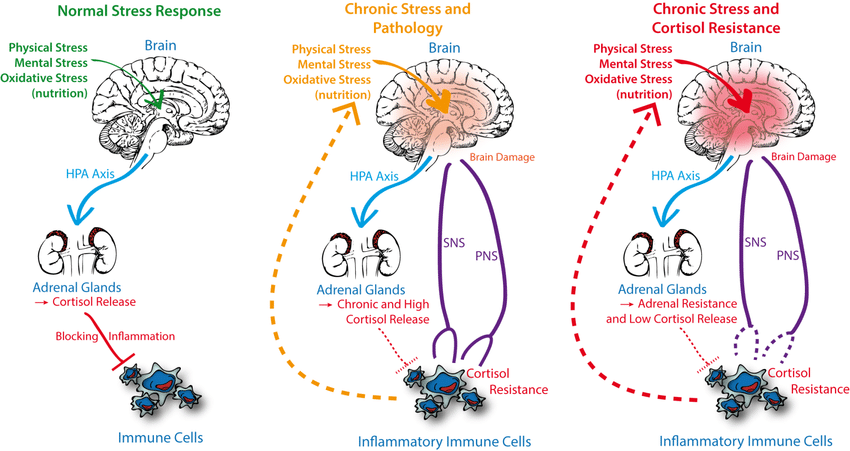
How the Brain & Body Respond to Stress
The HPA axis and sympathetic nervous system coordinate the classic fight-or-flight response. Short bursts help survival; chronic activation strains organs and cognition.
1) The Immediate Stress Response
Brain hubs: The amygdala flags threat and signals the hypothalamus. The hypothalamus activates the sympathetic nervous system (SNS) and the HPA axis.
| Pathway | What Happens |
|---|---|
| SNS (seconds) | Preganglionic signals prompt adrenal medulla to release adrenaline (epinephrine) and norepinephrine → ↑ heart rate, blood pressure, bronchodilation, glucose mobilization, vigilance. |
| HPA axis (minutes) | Hypothalamus (CRH) → pituitary (ACTH) → adrenal cortex (cortisol) → sustained energy availability; immune modulation. |
| Prefrontal cortex | Under high arousal, PFC control can drop → more impulsive, reflex-driven decisions. |
2) How Stress Affects Different Organs
| Organ/System | Key Effects |
|---|---|
| Brain | Chronic stress impairs hippocampal-dependent memory, heightens anxiety, and can slow executive functions. |
| Heart | ↑ heart rate and blood pressure → risk for hypertension and cardiovascular disease. |
| Lungs | Rapid breathing; can aggravate asthma or hyperventilation syndromes. |
| Digestive | Nausea, stomach pain, reflux; altered motility and sensitivity as seen in IBS. |
| Immune | Glucocorticoid-mediated suppression over time → greater infection susceptibility. |
| Musculoskeletal | Increased tone → tension, headaches, spasms, pain. |
| Skin | Flares of acne, eczema, and other inflammatory dermatoses. |
3) Disorders Linked with Chronic Stress
- Anxiety disorders
- Depression
- Post-traumatic stress disorder (PTSD)
- Hypertension & cardiovascular disease
- Irritable bowel syndrome (IBS)
- Autoimmune disease flares
- Sleep disorders (insomnia, sleep paralysis)
- Migraines and tension headaches
4) Systems Involved
| System | Role in Stress |
|---|---|
| Endocrine | The hypothalamus signals the pituitary → adrenal glands to release cortisol, adrenaline, and norepinephrine. Short-term: mobilize energy, sharpen attention. Long-term elevation: sleep disruption, metabolic changes, mood effects. |
| Nervous | The sympathetic branch drives fight-or-flight (↑ HR, RR, muscle readiness). The parasympathetic branch restores calm; in chronic stress, SNS bias persists, sustaining anxiety and somatic strain. |